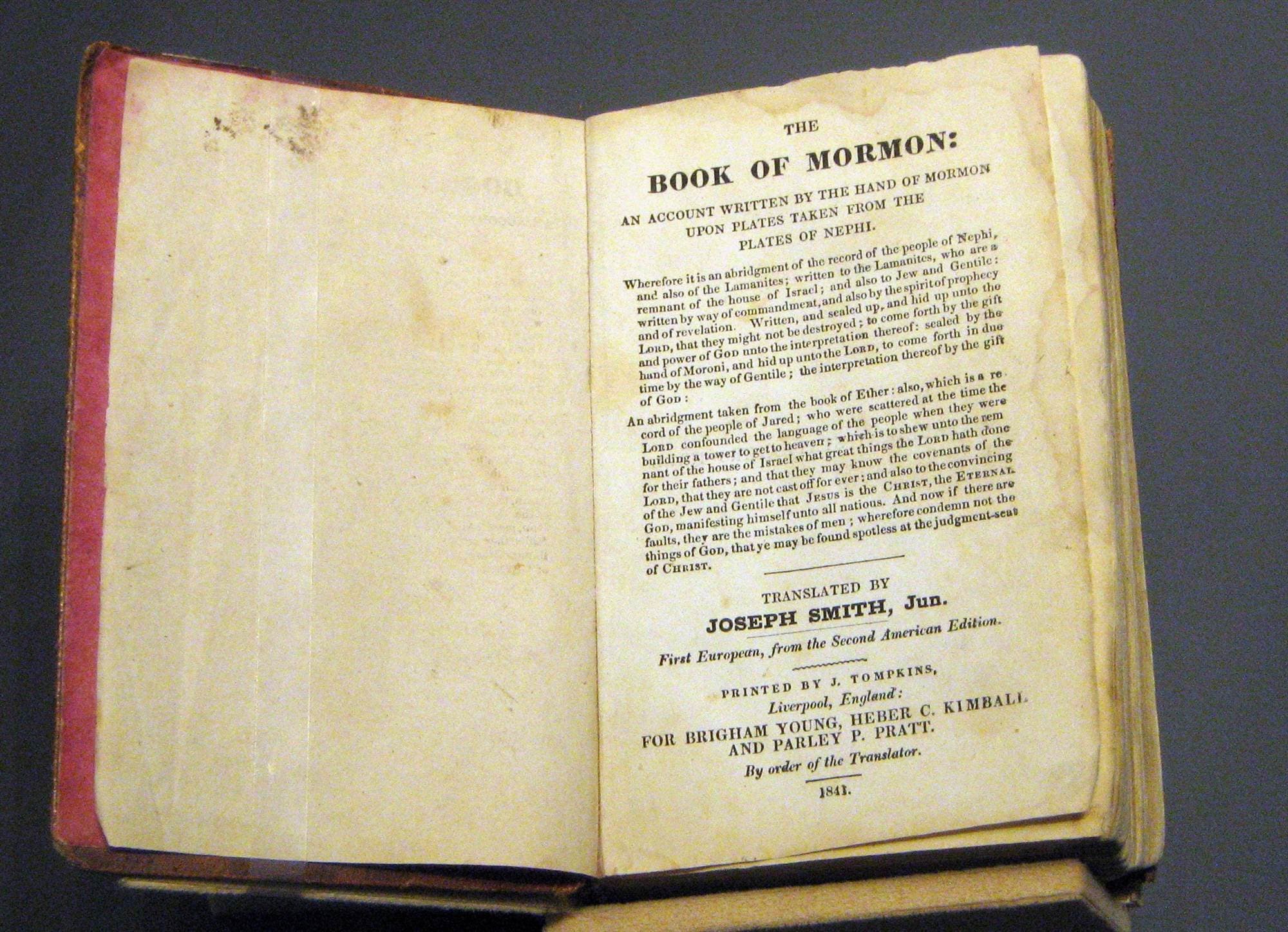
Is the Book of Mormon Scripture?
The Church of Jesus Christ of Latter-day Saints teaches that God's revelation did not stop with the Bible. Alongside it, the Church holds three more books as equally scriptural — the Book of Mormon, the Doctrine and Covenants, and the Pearl of Great Price — received through Joseph Smith and, for continuing revelation, his successors as "prophets, seers, and revelators." Together with the Bible these are called the "standard works."
The Berea does not recognize the Book of Mormon, the Doctrine and Covenants, or the Pearl of Great Price as the word of God.
That conclusion does not rest on these books simply being newer than the Bible — arriving later does not, by itself, make a claim false. The real question, examined on this site's dedicated page on Scripture's authority, is narrower: can a later claimed revelation add content that Scripture nowhere teaches, or that actually contradicts what God has already revealed, and still be his word? This page states what Latter-day Saint teaching actually claims about these books; the specific points of contradiction are examined in full in this site's other Latter-day Saint studies.
What's actually being claimed, and how Scripture tests it
- Latter-day Saint teaching does not reject the Bible. Article 8 of the Articles of Faith affirms the Bible as the word of God — "as far as it is translated correctly" — a real qualifier the Book of Mormon is not given.
- The Book of Mormon is presented as scripture, not commentary. Its own title page and the Church's official introduction call it "a volume of holy scripture comparable to the Bible" and "Another Testament of Jesus Christ" — a claim to the same category of authority, not a lesser one.
- Continuing revelation is a live, standing claim. Article 9 affirms that God "will yet reveal many great and important things" — belief in an open, ongoing prophetic office, not a closed apostolic canon.
- Scripture's test is content, not the claim's respect for what came before. Galatians 1:8-9: even an authoritative-sounding later message is rejected if its content disagrees with what has already been revealed — the standard this page and its companion studies apply.
This page states the shape of the claim and the test. The specific doctrinal content carried by these books — about God, about Jesus Christ, and about salvation — is examined against Scripture directly in this site's other Latter-day Saint studies, linked below.
Examine it for yourself
The evidence, the interpretations and the conclusion, separated so you can examine each step. Every passage is linked; read them in context.
Why official LDS sources, first
Every claim on this page about what Latter-day Saint teaching says is drawn from LDS scripture (the standard works) or from the Church's own official current material, and labeled by source type: canonized scripture, official current teaching, or historical statement with its date and context. Where a claim could not be verified against an official or primary LDS source, it is left out rather than asserted on secondhand authority — the same discipline this site applies to every tradition it examines.
What they teach
Stated accurately, on its own terms, then examined against Scripture.
The Book of Mormon describes itself, on its own title page, as a record of ancient peoples written "to the convincing of the Jew and Gentile that Jesus is the Christ, the Eternal God, manifesting himself unto all nations" — the Church's own subtitle for it is "Another Testament of Jesus Christ." The official Church introduction calls it "a volume of holy scripture comparable to the Bible." The Church's founding statement of belief, Joseph Smith's Articles of Faith (Article 8), states the relationship precisely: "We believe the Bible to be the word of God as far as it is translated correctly; we also believe the Book of Mormon to be the word of God."
This site does not claim Latter-day Saints reject the Bible — Article 8 affirms it directly, and that affirmation is stated fairly here. But look at the exact shape of the two claims side by side: the Bible is affirmed "as far as it is translated correctly," a real qualifier that leaves room for correction, while the Book of Mormon is affirmed without that qualifier at all. That is not a symmetrical claim to two equally authoritative books — it is a structure in which the newer text is positioned as the standard by which the older one's accuracy gets judged. Scripture's own test for a later claimed revelation, examined on this site's dedicated page on Scripture's authority, does not turn on how respectfully the newer claim speaks of the earlier one. Paul's warning is that even a message that sounds authoritative — his example is deliberately extreme, an angel from heaven — is to be rejected, not deferred to, if it "preach[es] any 'good news' other than that which we preached to you" (Galatians 1:8-9). The question this page and its companion studies on Latter-day Saint teaching examine is not whether the Book of Mormon speaks well of the Bible — it does — but whether the doctrine that comes with it agrees with what the Bible already reveals about God, Christ, and salvation. Where this site's other Latter-day Saint studies show it does not, affirming the Bible in the title page does not settle the deeper question.
- Galatians 1:8-9
Even a message that speaks respectfully of what came before is tested by its content, not by its own claimed relationship to it.
Article 9 of the Articles of Faith states: "We believe all that God has revealed, all that He does now reveal, and we believe that He will yet reveal many great and important things pertaining to the Kingdom of God." The Doctrine and Covenants and Pearl of Great Price are official standard works alongside the Bible and Book of Mormon — the Doctrine and Covenants collecting revelations received through Joseph Smith and his successors, and the Pearl of Great Price collecting material Joseph Smith produced, canonized by formal Church action on October 10, 1880.
That God can reveal things is not in dispute — Scripture itself was given over many centuries, through many human authors. The question is narrower: does new revelation claiming ongoing prophetic authority, after the apostolic canon, add doctrine Scripture nowhere teaches and, on specific points, actually contradicts? Scripture describes the apostolic faith as "once for all delivered to the saints" (Jude 1:3), a settled deposit rather than an open series each generation's prophet adds new content to. This site's other studies on Latter-day Saint teaching examine specific content carried by this claimed continuing revelation — the nature of God, the identity of Jesus Christ, and what salvation requires — against Scripture directly. Believing revelation continues in general is not the same claim as any particular revealed content being true; each has to be tested on its own, which is exactly what those studies do.
- Jude 1:3
"The faith which was once for all delivered to the saints" — a settled deposit, not a canon each generation's prophet adds new content to.
What the evidence supports
The Book of Mormon, Doctrine and Covenants, and Pearl of Great Price are taught, officially and without qualification, as scripture alongside the Bible, received through a claimed continuing prophetic office. By Scripture's own standard for testing a later claimed revelation — agreement with what God has already revealed, not the respect it shows what came before — The Berea does not recognize these books as the word of God.
Articles of Faith 1:8 affirms the Bible conditionally ("as far as it is translated correctly") while affirming the Book of Mormon unconditionally; Article 9 affirms an open, ongoing revelatory claim. Galatians 1:8-9 rejects even an authoritative-sounding later message when its content disagrees with revelation already given, and Jude 1:3 describes the apostolic faith as a settled deposit. The specific doctrinal content these books carry — examined in this site's other Latter-day Saint studies — departs from Scripture on the nature of God, the identity of Christ, and salvation. Therefore The Berea does not recognize the Book of Mormon, Doctrine and Covenants, or Pearl of Great Price as the word of God.
Examine further
- 2 Timothy 3:16-17
Scripture as God-breathed and sufficient — examined at length on this site's dedicated page on Scripture's authority.
- Deuteronomy 4:2
"You shall not add to the word which I command you, neither shall you take away from it" — Israel's own standing instruction regarding revealed commandments.
Discuss and study
- Why does it matter that the Bible is affirmed conditionally ("as far as it is translated correctly") while the Book of Mormon is affirmed without that qualifier?
- What would it take to actually test a claim to continuing revelation, rather than accepting or rejecting it as a category?