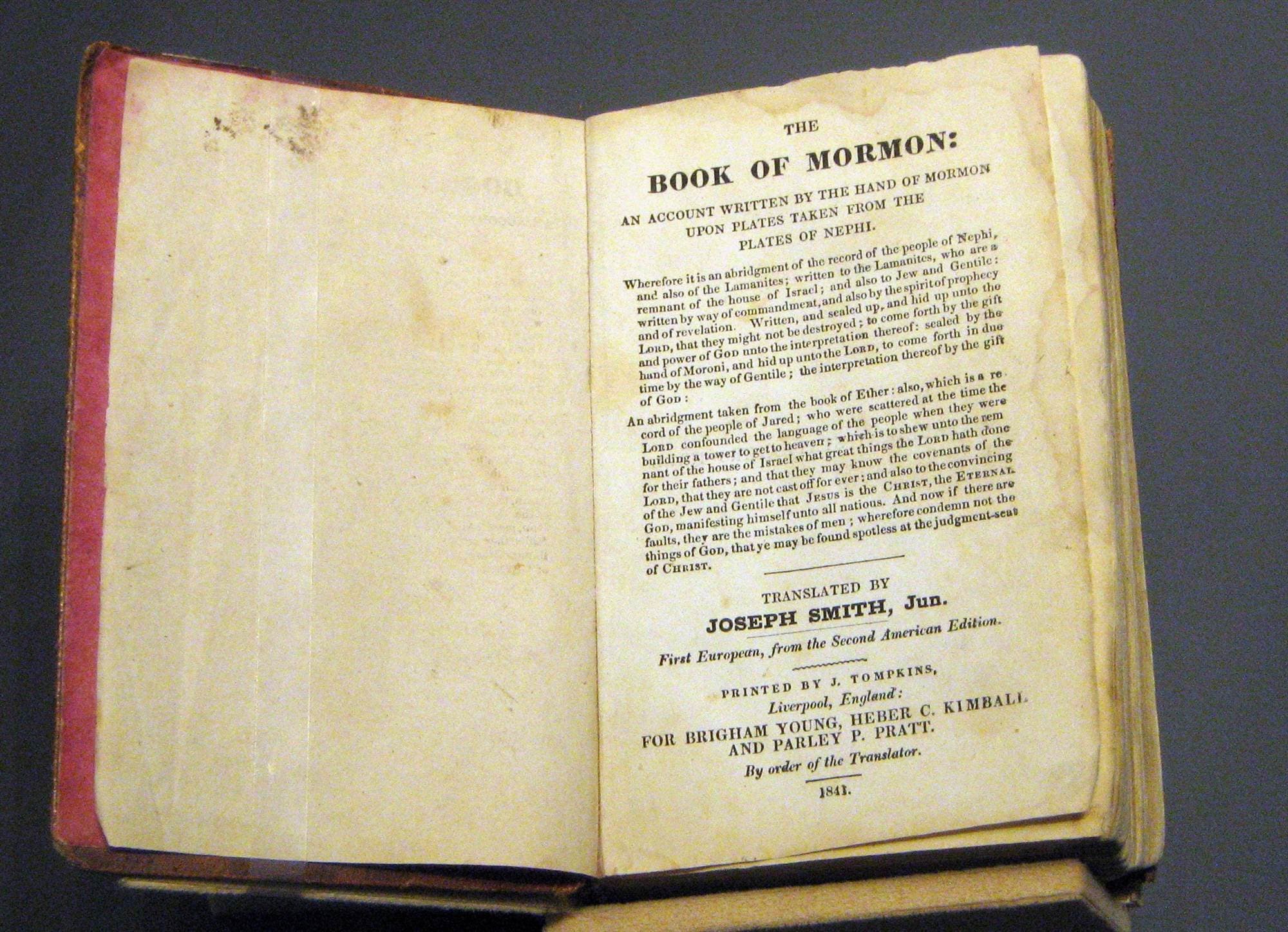
Was Joseph Smith a prophet of God?
Latter-day Saints honor Joseph Smith as the prophet through whom God restored his true church to the earth. Official teaching holds that in 1820 God the Father and Jesus Christ appeared to him personally and told him the existing churches' creeds were an abomination; that he later translated the Book of Mormon from golden plates by revelation; and that he received priesthood authority — believed lost from the earth since the apostolic era — through the resurrected John the Baptist and the apostles Peter, James, and John appearing to him. The Church's own canonized tribute after his death states he "has done more, save Jesus only, for the salvation of men in this world, than any other man that ever lived in it" (Doctrine and Covenants 135:3).
The Berea does not recognize Joseph Smith as a prophet of God.
This is not a judgment about his sincerity, character, or the reality of his religious experience — none of that is what settles whether a claimed prophet is genuinely from God. Scripture gives a specific, content-based test for any claimed prophet: does the message agree with what God has already revealed? That test, applied honestly, is what this page and its companion studies examine.
What's actually being claimed, and how Scripture tests it
- The First Vision: existing churches declared wrong. Joseph Smith's canonized account describes the Father and the Son appearing and declaring the creeds of existing churches "an abomination" (Joseph Smith—History 1:19).
- Claimed restoration of lost priesthood authority. Official teaching holds the Aaronic and Melchizedek priesthoods were conferred on him by John the Baptist and by Peter, James, and John, appearing as resurrected beings (Doctrine and Covenants 13; 27:12-13).
- Scripture's test is content, not the claim's source or confidence. Deuteronomy 18:20-22 and 1 John 4:1-3 both test a prophetic claim by whether it agrees with what God has already revealed, including, in 1 John's case, who Jesus Christ is.
- The specific content is examined in full elsewhere on this site. This page states the shape of the claim and the test. The concrete points of disagreement — the nature of God, the status of Christ, and what salvation requires — are each examined in their own dedicated study, linked below.
The same standard applied here would be applied to any claimed prophet, from any tradition, including one arising within professing Christianity — that consistency is what makes this a fair test rather than a conclusion reached in advance.
Examine it for yourself
The evidence, the interpretations and the conclusion, separated so you can examine each step. Every passage is linked; read them in context.
Why official sources, with history labeled as history
This page distinguishes canonized LDS scripture (Joseph Smith—History, the Doctrine and Covenants) from the Church's own official current explanatory material (the Gospel Topics essay on the First Vision accounts), because these carry different kinds of authority within Latter-day Saint teaching itself. Presenting a historical account as if it were current official doctrine, or the reverse, would misrepresent what the Church itself claims — which this site's sourcing standard does not permit.
What they teach
Stated accurately, on its own terms, then examined against Scripture.
Joseph Smith's canonized account (Joseph Smith—History 1:17, 19, in the Pearl of Great Price) describes God the Father and Jesus Christ personally appearing to him in 1820: "I saw two Personages, whose brightness and glory defy all description, standing above me in the air. One of them spake unto me, calling me by name and said, pointing to the other — This is My Beloved Son. Hear Him!" He records being told "that all their creeds were an abomination in his sight; that those professors were all corrupt." The Church's own Gospel Topics essay on this event acknowledges Joseph Smith gave multiple accounts over the years and states plainly that they "tell a consistent story, though naturally they differ in emphasis and detail."
This site does not rest its case on the existence of multiple First Vision accounts — the Church's own essay addresses that directly, and retelling a real experience with varying emphasis over time is not, by itself, evidence of insincerity. The question Scripture asks of any claimed prophet is not how vivid or consistent the experience was, but whether its content agrees with what God has already revealed. Deuteronomy 18:20-22 ties a true prophet's word to agreement with what Yahweh has actually spoken, and 1 John 4:1-3 gives the specific test of whether a message rightly confesses who Jesus Christ is. This site's other Latter-day Saint studies examine, point by point, specific content associated with the Restoration — the nature of God, the premortal status of Christ, and what salvation requires — against Scripture directly. That content-based examination, not the number of times the experience was retold, is where this claim is actually tested.
- Deuteronomy 18:20-22
A prophet's claim is tested against agreement with what God has already spoken, not against the vividness of the experience behind it.
- 1 John 4:1-3
The specific test: does the claimed message confess who Jesus Christ actually is.
Official LDS teaching holds that the priesthood authority Joseph Smith claimed had been lost from the earth after the apostolic era was restored to him by angelic visitation. The Aaronic Priesthood was conferred, per the canonized account, by the resurrected John the Baptist: "Upon you my fellow servants, in the name of Messiah I confer the Priesthood of Aaron... and this shall never be taken again from the earth" (Doctrine and Covenants 13). The Melchizedek Priesthood was conferred, per the canonized account, by Peter, James, and John: "whom I have sent unto you, by whom I have ordained you and confirmed you to be apostles" (Doctrine and Covenants 27:12-13).
Scripture's standard for a claimed later revelation does not change based on how impressive its claimed source is — Paul's own example, in the same passage this site applies to any tradition's claim to authoritative new revelation, is deliberately extreme: "even if we or a messenger out of heaven" preaches something different from the gospel already delivered, "let him be cursed" (Galatians 1:8-9). A claimed angelic visitation does not exempt the resulting content from that test — it makes the test more directly applicable, since Paul names an angel specifically. Whether this claimed restoration is genuinely from God turns on whether the doctrine that came with it — examined point by point in this site's other Latter-day Saint studies — agrees with what God had already revealed, not on the office or identity claimed for the messenger.
- Galatians 1:8-9
Even a message reportedly delivered by an angel is rejected if its content disagrees with the gospel already given.
What the evidence supports
Joseph Smith is honored within the Church of Jesus Christ of Latter-day Saints as the prophet of the Restoration, recipient of the First Vision and of restored priesthood authority by angelic visitation. Applying Scripture's own test for a claimed prophet — agreement with what God has already revealed — the specific doctrinal content associated with his claimed revelations, examined in this site's other Latter-day Saint studies, does not meet that standard. The Berea does not recognize Joseph Smith as a prophet of God.
Deuteronomy 18:20-22 and 1 John 4:1-3 test a prophetic claim by its content, not its claimed source or the sincerity of the experience behind it. Galatians 1:8-9 applies the same standard even to a message reportedly delivered by an angel — directly relevant given the claimed angelic priesthood restoration. This site's other Latter-day Saint studies show the doctrinal content associated with Joseph Smith's claimed revelations — concerning the nature of God, the premortal status of Christ, and what salvation requires — departs from what Scripture already reveals.
Examine further
- Galatians 1:9
"If any man preaches to you any 'good news' other than that which you received, let him be cursed" — restated for emphasis in the same passage.
- 2 Corinthians 11:13-15
A warning that even a message that looks like "an angel of light" is tested by its content, not its appearance of authority.
Discuss and study
- Why does Scripture test a prophet's message by its content rather than by the scale of the movement that follows him?
- What would change about this study if it turned out to be examining a claimed prophet arising from within a different tradition entirely?