Latter-day Saints (LDS)
Latter-day Saints (LDS), often called Mormons, believe the original Christian church was lost not long after the apostles died — and that God brought it back through a man named Joseph Smith in the 1820s.
The Church of Jesus Christ of Latter-day Saints (LDS) holds distinctive teachings on scripture, continuing revelation, the nature of God, and salvation. This collection examines those teachings using the Church's own scriptures and official sources, then compares them with Scripture.
What Latter-day Saints Believe
Joseph Smith and the “Restoration”
Latter-day Saints teach that true Christianity disappeared for centuries — what they call the Great Apostasy. Then, they say, God the Father and Jesus Christ appeared to a young Joseph Smith in 1820 and told him not to join any existing church.
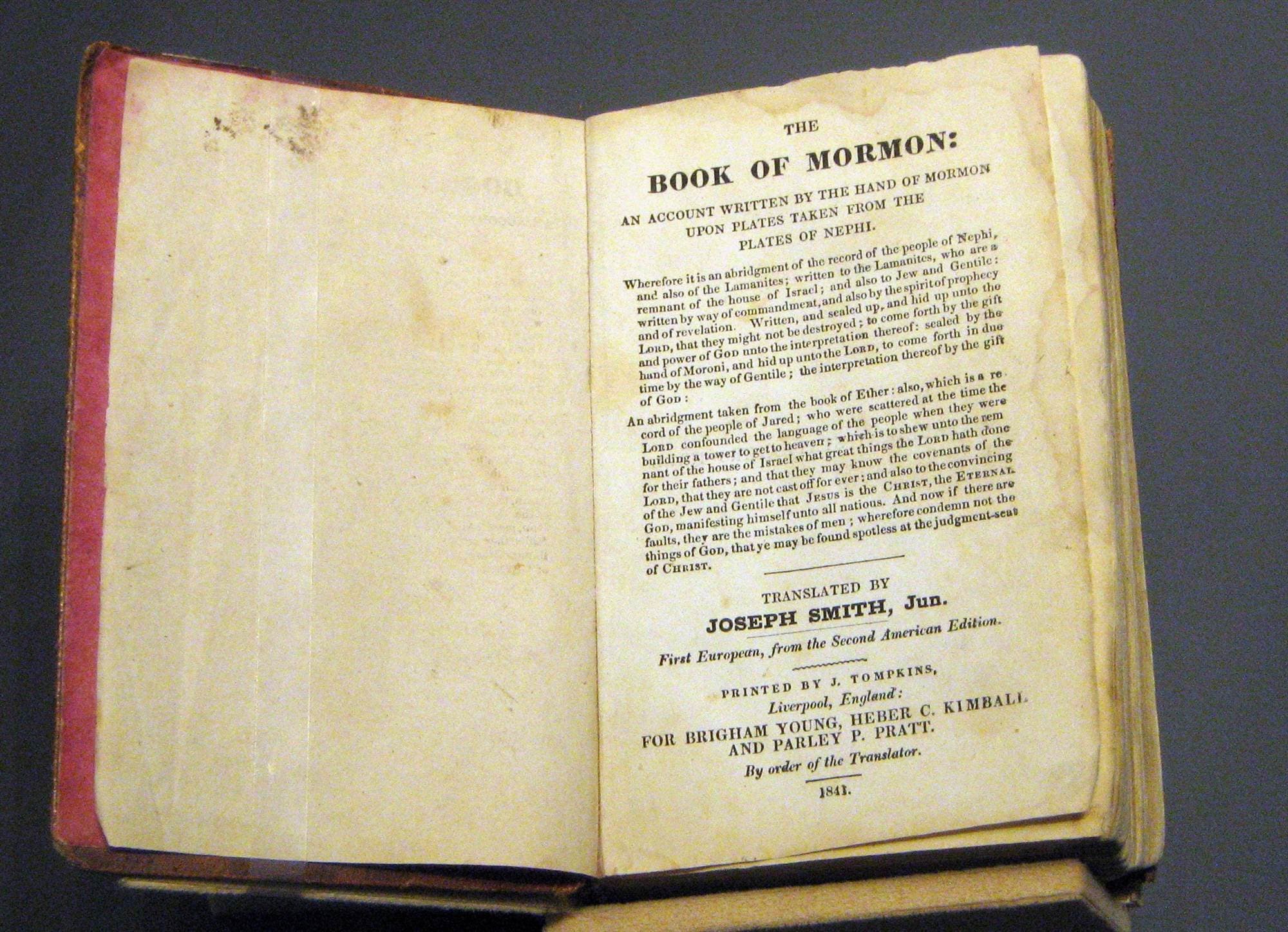
Smith later said he translated a new book of scripture, the Book of Mormon, from golden plates, with an angel's help. LDS teaching calls this whole sequence the Restoration.
Four books of scripture, not one
Along with the Bible, the LDS Church treats three other books as equally scripture: the Book of Mormon, the Doctrine and Covenants (revelations given through Joseph Smith and later leaders), and the Pearl of Great Price.
And because the Church has a living prophet, its teaching can keep being added to — unlike other Christians, who treat the Bible's own list of books as complete.
Where human beings came from, before this life
LDS teaching says that before you were born, you existed as a spirit — one of God the Father's spirit children, in what's called premortal existence. Jesus, in this teaching, was the first of those spirits.
Lucifer (Satan) is understood the same way — another of the Father's spirit children — which is why LDS teaching describes Jesus and Satan as, in that specific sense, spirit brothers. That's an accurate description of the teaching, not a caricature of it, but it's easy to hear as a slogan in either direction; the detailed question below explains it in its actual context.
What God is, and what humans can become
LDS teaching says God the Father was once a man who progressed to become God — and that faithful humans can, in the same way, eventually become gods themselves.
It also teaches that Father, Son, and Holy Spirit — called the Godhead — are three separate beings, united in purpose, not one God in three persons the way the historic Christian Trinity teaches.
Salvation, and something more: exaltation
LDS teaching says almost everyone eventually receives some level of salvation. But the fullest reward — called exaltation, becoming like God — is reserved for faithful Latter-day Saints who keep the Church's commandments and go through its ordinances: ceremonies like baptism and temple sealing, some of which can even be performed on behalf of someone who has already died.
Where This Differs From What the Bible Teaches
The Bible says God has always been God, with no beginning and no becoming (Psalm 90:2; Malachi 3:6). It says Jesus is the eternal Son who created everything else — not a spirit brother of Satan, who is himself a created angel (John 1:1-3; Colossians 1:16-17). And it treats its own set of books as sufficient, not as something that needed later correction (2 Timothy 3:16-17).
It also teaches that salvation is a finished gift, received by grace through faith — not a two-tier system where the best reward has to be earned through additional ceremonies (Ephesians 2:8-9; Titus 3:5). The questions below examine each of these claims using the Church's own scriptures and official teaching.
Almost everything else here depends on one historical claim: that Joseph Smith actually translated an ancient book of scripture. Start there, because that's the foundation the rest of this page is built on.
Is the Book of Mormon Scripture?
Examine what the Book of Mormon claims to be and how LDS teaching relates it, the Doctrine and Covenants, and the Pearl of Great Price to the Bible, then test that claim against Scripture's own standard for a later claimed revelation.
Scripture & Prophets
Was Joseph Smith a prophet of God?
Examine Joseph Smith's prophetic claims from official LDS sources, then apply Scripture's own standard for testing a claimed prophet.
Was Christ's Church lost and restored through Joseph Smith?
Examine the LDS Great Apostasy and Restoration claim precisely, distinguishing it from the well-documented fact of real historical corruption and error, then test the total-apostasy claim against Scripture's own promise.
God & Jesus
Are Jesus and Satan brothers, and was Jesus created?
Examine precisely what official LDS teaching says about premortal spirits, including Jesus and Lucifer, fairly and without the popular shorthand, then compare it with Scripture's claim that Jesus is the Creator rather than a member of the created order.
Is the LDS Godhead the biblical Trinity?
Explain precisely what LDS teaching says about the Father, Son, and Holy Ghost — their unity, distinctness, and embodiment — then compare it with the biblical Trinity.
Was God once a man — and can human beings become gods?
Distinguish historically documented LDS teaching, canonized doctrine, and current official explanation on whether God was once a man and whether humans can become gods, then compare with Scripture's teaching on God's eternality and believers' glorification.
Salvation & Ordinances
Is LDS salvation and exaltation the biblical Gospel?
Represent LDS teaching on grace, salvation, and exaltation fairly and at its strongest, including a real internal LDS scholarly disagreement, then compare it with the biblical Gospel's single, unconditioned hope received by grace through faith in Christ.
Can people be baptized for the dead?
Examine the LDS practice of proxy baptism for the dead and its basis in 1 Corinthians 15:29, then compare it with the New Testament's consistent pattern of baptism tied to a believer's own faith and repentance.
Go deeper
The positive biblical foundation behind this comparison — not a response to Latter-day Saints (LDS), but what Scripture teaches on its own terms.