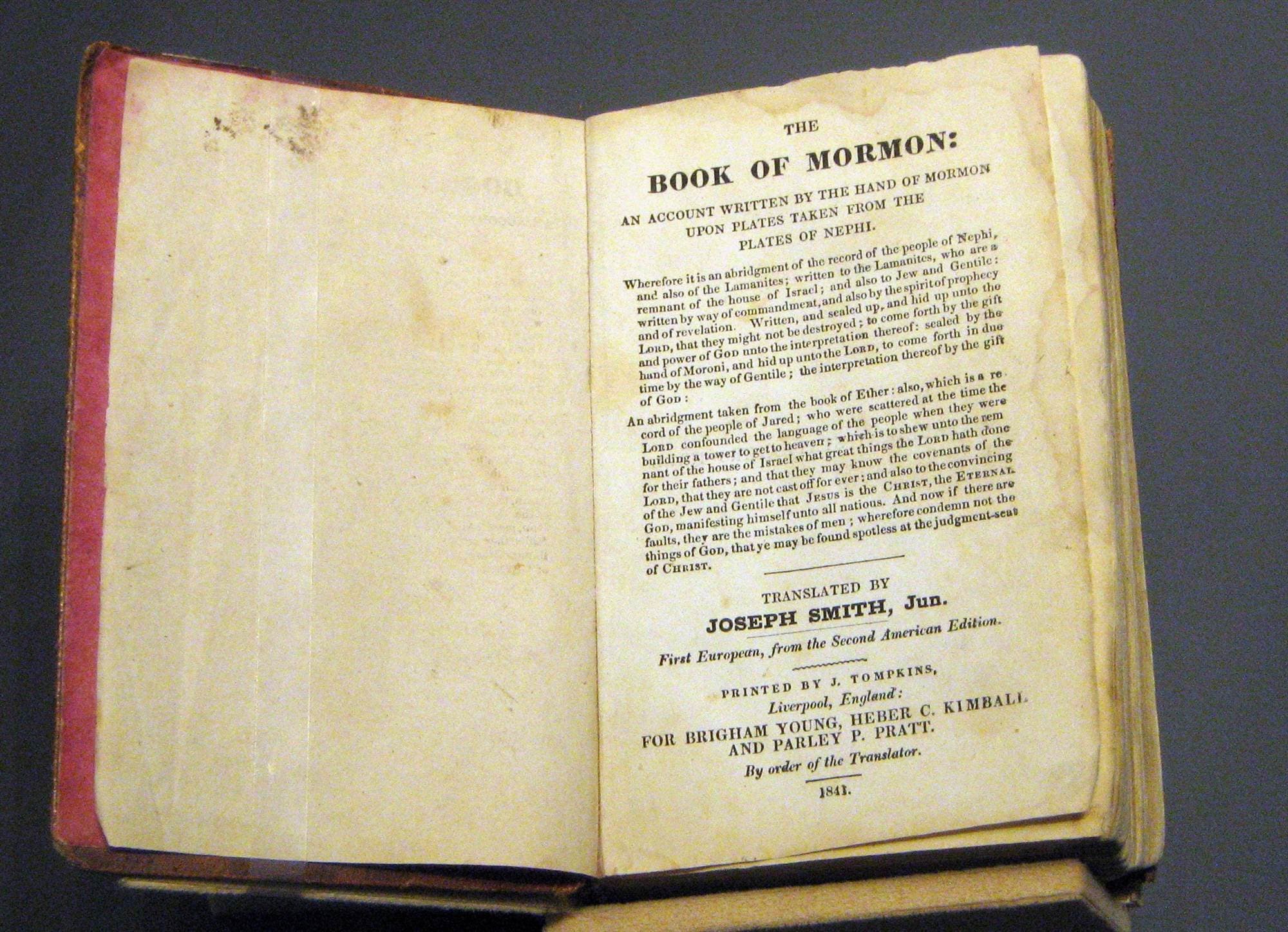
Was God once a man — and can human beings become gods?
A well-known couplet within Latter-day Saint tradition states: "As man now is, God once was; As God now is, man may be" (Lorenzo Snow, 1840). It raises two separate questions this page keeps distinct rather than blending together: was God the Father himself once a mortal human being, and can faithful humans eventually become gods?
These two questions do not currently carry the same weight within official LDS teaching, and this page states that difference plainly rather than treating both halves as equally settled.
"God was once a man" traces to Joseph Smith's 1844 King Follett discourse — an uncanonized sermon, recorded only in scribes' notes, which the Church's own history page describes as historically influential but not scripture. The Church's own 2014 official essay on this subject says directly that "little has been revealed" about this half of the couplet and "little is taught." "Man may become like God" — exaltation — is different: it is current, developed, official teaching, grounded in canonized scripture.
The Berea affirms Scripture on both counts: God has never been anything other than God, and believers' glorification, while real, is not becoming additional gods.
What's officially settled, what isn't, and what Scripture says
- "God was once a man": historical, not currently emphasized. The Church's own current material calls this "deep theology we don't know very much about" — this page does not claim it as settled modern doctrine, but examines its historical content against Scripture anyway.
- Scripture: God has never been anything but God. Numbers 23:19: "God is not a man" — and Malachi 3:6: "I, Yahweh, don't change" — no prior lesser state, ever.
- Exaltation: current, official, grounded in Christ's Atonement. Doctrine and Covenants 132:20 states the faithful "shall be gods" — official teaching ties this explicitly to Christ's Atonement, not independent achievement.
- Scripture: glorification is conformity to Christ, not becoming a god. 2 Peter 1:4's "partakers of the divine nature" is a real biblical parallel worth taking seriously — and still a different claim from becoming an additional, countable god, examined carefully below rather than dismissed.
This page tries to do the harder, fairer thing on both questions: state plainly what current official teaching does and doesn't emphasize, rather than picking whichever version makes the argument easiest, and take the real biblical vocabulary overlap on glorification seriously rather than waving it away.
Examine it for yourself
The evidence, the interpretations and the conclusion, separated so you can examine each step. Every passage is linked; read them in context.
Why the two halves of the couplet are kept separate
Treating "God was once a man" and "man may become a god" as a single package obscures a real, documented difference in how official LDS teaching currently treats them. This page follows the Church's own official material in distinguishing historically documented teaching (the King Follett discourse), a couplet that summarizes it (Lorenzo Snow's), and currently developed official doctrine (exaltation, grounded in canonized Doctrine and Covenants text and a 2014 official essay) — rather than flattening all three into one claim of uniform weight.
What they teach
Stated accurately, on its own terms, then examined against Scripture.
A couplet by Lorenzo Snow (1840, later Church president) states: "As man now is, God once was; As God now is, man may be." Joseph Smith's 1844 King Follett discourse — an uncanonized funeral sermon with no verbatim transcript, recorded only in scribes' notes, and officially described as influential but not scripture — is remembered for teaching that "God Himself was once as we are now, and is an exalted man." Current official teaching gives this specific claim little emphasis: the Church's 2014 Gospel Topics essay "Becoming Like God" states plainly, "Little has been revealed about the first half of this couplet, and consequently little is taught." Church President Gordon B. Hinckley, asked about it directly in a 1997 press interview, replied: "That gets into some pretty deep theology that we don't know very much about."
This page does not treat "God was once a man" as though it were settled, emphasized, current LDS doctrine — the Church's own official material, quoted above, explicitly says otherwise. But Scripture's own claim about God does not depend on how much weight any institution currently gives a historical statement; it forecloses the content of that statement directly, regardless of its present institutional standing. "God is not a man, that he should lie, nor a son of man, that he should repent" (Numbers 23:19) — a categorical distinction, not a difference of degree. "I, Yahweh, don't change" (Malachi 3:6). "From everlasting to everlasting, you are God" (Psalms 90:2) — not a description of God arriving at his current status from an earlier, lesser one, but of a God who has never been anything else. "I am the first, and I am the last; besides me there is no God" (Isaiah 44:6). Whatever historical or institutional weight the King Follett discourse carries within Latter-day Saint tradition, its content — that God the Father was himself once a mortal, progressing being — is precisely what these passages rule out.
- Numbers 23:19
"God is not a man" — a categorical distinction between God and any human, past or present.
- Malachi 3:6
"I, Yahweh, don't change" — no prior lesser state to have progressed from.
- Psalms 90:2
"From everlasting to everlasting, you are God" — never anything but God.
- Isaiah 44:6
"I am the first, and I am the last; besides me there is no God" — no God before him, and no becoming.
Canonized scripture states of the faithful in the highest degree of the celestial kingdom: "Then shall they be gods, because they have no end; therefore shall they be from everlasting to everlasting, because they continue; then shall they be above all, because all things are subject unto them" (Doctrine and Covenants 132:20). The official "Becoming Like God" essay describes exaltation as "receiving one's full inheritance as a child of Heavenly Father, which is available through the Atonement of Jesus Christ, by obedience to the laws and ordinances of the gospel" — explicitly grounded in Christ's Atonement, not achieved independently, and explicitly bounded: "Our progression will never change His identity as our Father and our God."
Scripture does describe something that can sound similar at a glance: believers becoming "partakers of the divine nature" (2 Peter 1:3-4), and being "conformed to the image of his Son" (Romans 8:29). This is worth taking seriously rather than waving away, because the vocabulary genuinely overlaps. But the content is a different claim. Biblical glorification describes creatures brought, by grace, into deep relational and moral union with God's own holiness and life through Christ — sharing his moral character, his imperishability, his glory reflected rather than his rank as Creator. It is never described as creatures becoming additional gods, countable alongside the one God: "there is no God besides me" (Isaiah 44:6) remains true after glorification, not only before it. Paul's own confession — "one God, the Father... and one Lord, Jesus Christ" (1 Corinthians 8:6) — does not describe an expanding number of divine beings as history continues. Exaltation and biblical glorification use some of the same words for what are, on examination, different destinations: becoming a god within a functioning family of gods, or being conformed forever to the one God's own moral likeness without ever becoming another instance of deity.
- 2 Peter 1:3-4
"Partakers of the divine nature" — genuine overlap in vocabulary with LDS exaltation language, examined here rather than ignored.
- Isaiah 44:6
"Besides me there is no God" — remains true of glorified believers, not only before glorification.
- 1 Corinthians 8:6
"One God, the Father... and one Lord, Jesus Christ" — the number of divine beings does not expand as more are glorified.
What the evidence supports
God has never been anything other than God — Scripture's own testimony leaves no room for a prior mortal or lesser state, whatever institutional weight a historical LDS teaching about it currently carries. LDS teaching about exaltation is current and official, grounded in Christ's Atonement, and uses biblical-sounding language — but biblical glorification describes creatures conformed to Christ's moral likeness within the one God's own life, not creatures becoming additional gods. Both claims cannot be true in the same sense as Scripture's own testimony. The Berea affirms that Scripture, not either half of the couplet.
Numbers 23:19, Malachi 3:6, Psalms 90:2, and Isaiah 44:6 together teach that God has never changed and has never been other than God — foreclosing the King Follett discourse's content regardless of its current institutional weight, which the Church's own 2014 essay itself treats as minimal. 2 Peter 1:3-4's "partakers of the divine nature" is a genuine biblical parallel to exaltation language, but Isaiah 44:6 and 1 Corinthians 8:6 remain true of glorified believers, not only before glorification — the number of divine beings does not expand. Therefore The Berea rejects both that God was once a man and that humans become additional gods in the sense Doctrine and Covenants 132:20 describes.
Examine further
- James 1:17
"With whom can be no variation nor turning shadow" — God's unchanging nature stated directly.
- Romans 8:29
"Conformed to the image of his Son" — the shape biblical glorification actually takes: Christlikeness, not becoming a separate deity.
Discuss and study
- Why does it matter to distinguish a historically documented, uncanonized sermon from current official doctrine, rather than treating every LDS statement as equally binding?
- What is the actual difference between being "conformed to the image of Christ" and "becoming a god" — and why does that difference matter?