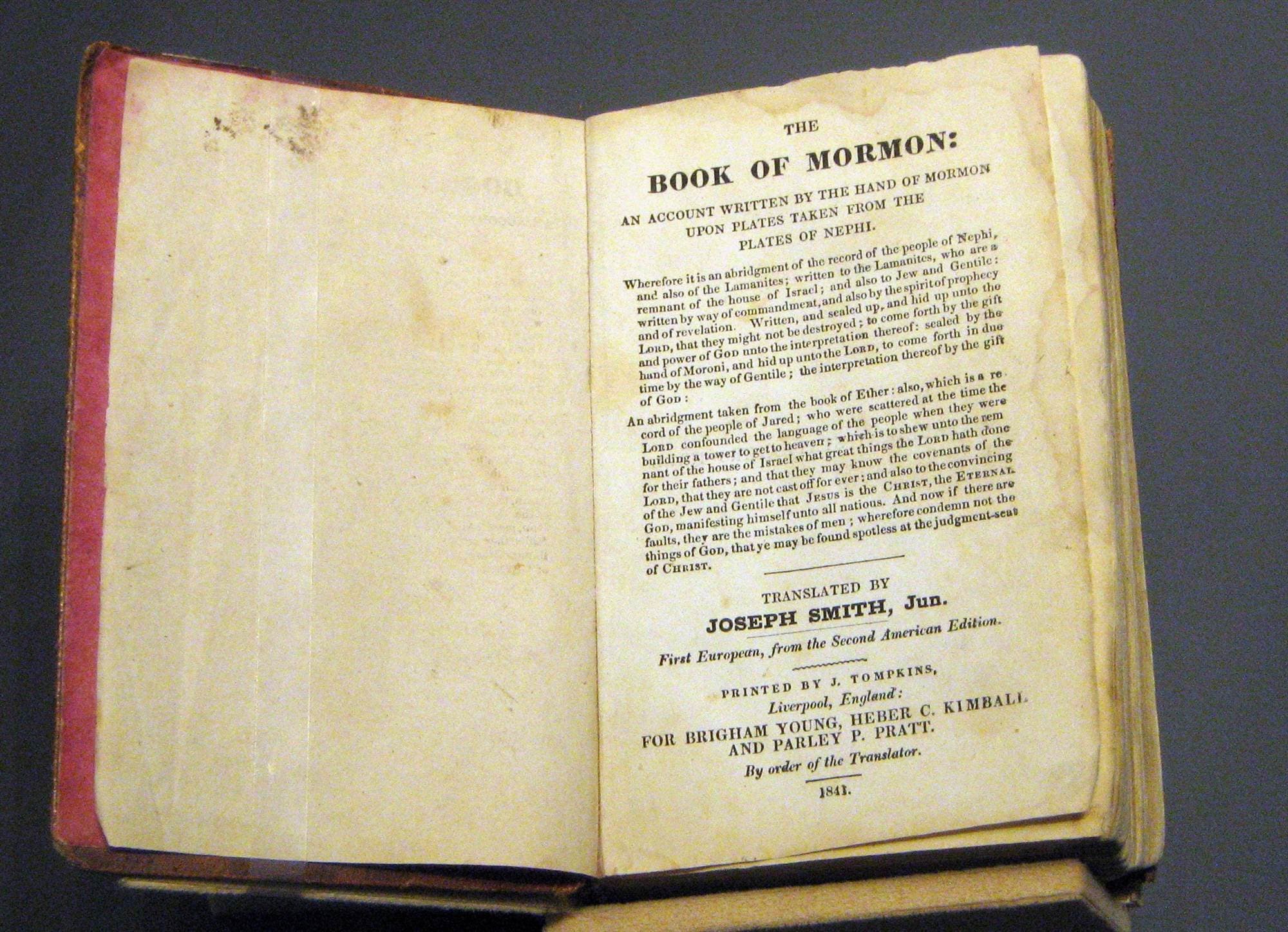
Is LDS salvation and exaltation the biblical Gospel?
The Church of Jesus Christ of Latter-day Saints teaches that Christ's Atonement provides grace — real, enabling divine help, not a reward for effort alone — and that resurrection into one of three kingdoms of glory is broadly available to nearly everyone. Beyond that general salvation, official teaching describes exaltation — becoming like God in the highest degree of the highest kingdom — as requiring additional, specific things: enduring faithfulness, temple ordinances, and eternal marriage.
This is not a bare system of earning heaven through good deeds, and this page does not present it as one.
The real question this page addresses is narrower and more specific: not whether LDS teaching uses words like grace, faith, and atonement — it clearly does, seriously and centrally — but whether the system as a whole, with its distinction between general salvation and a further-conditioned exaltation, is the same Gospel the New Testament proclaims: one hope, received by grace through faith in Christ, without a second tier of additional requirements.
Where the two accounts actually agree, and where they decisively differ
- Agreement: grace is real, enabling, and centered on Christ's Atonement. Official LDS teaching describes grace as "enabling power" flowing from Christ's Atonement, not a reward mechanically earned — a real point of common ground stated in LDS sources' own terms above.
- Disagreement: whether grace's fulness is conditioned on prior effort. "After all we can do" (2 Nephi 25:23), officially glossed as faith, repentance, baptism, and receiving the Holy Ghost required first, differs from Ephesians 2:8-9's "not of works, that no one would boast" — grace explicitly not conditioned on prior human effort.
- Disagreement: one hope, or two tiers. Exaltation requires temple ordinances and eternal marriage beyond general salvation (Doctrine and Covenants 131:1-4). John 3:36 states belief in the Son grants eternal life without naming a further, higher tier.
- The central question, stated plainly. Not "does LDS teaching contain grace, faith, and atonement" — it does. The question is whether a system with a further-conditioned higher tier, and grace's fulness following "all we can do," is the same Gospel the New Testament proclaims. This page's answer is no.
Representing LDS teaching's account of grace fairly, at its strongest, does not soften this conclusion — it sharpens exactly where the real disagreement is, which is the point of doing it carefully rather than caricaturing either side.
Examine it for yourself
The evidence, the interpretations and the conclusion, separated so you can examine each step. Every passage is linked; read them in context.
Why official sources, and an honest look at internal LDS disagreement
This page draws its account of LDS teaching from official Gospel Topics material and canonized scripture, and it names, rather than conceals, a real disagreement among Latter-day Saint scholars themselves about how to read 2 Nephi 25:23's "after all we can do." Concealing evidence that complicates the comparison — in either direction — is not a discipline this site's sourcing standard permits.
What they teach
Stated accurately, on its own terms, then examined against Scripture.
Official LDS teaching describes grace seriously and centrally: "Grace is... the divine help or strength... extended to us through the Atonement of the Lord Jesus Christ," strength that "helps us every day" and "enables" good works, not merely rewards them (Gospel Topics, "Grace"). The Book of Mormon states: "for we know that it is by grace that we are saved, after all we can do" (2 Nephi 25:23). Official teaching materials explain "after all we can do" as meaning a person must exercise faith, repent, be baptized, and receive the Holy Ghost to receive the fulness of that grace. A minority of LDS scholars themselves (writing in academic venues, not official Church material) have argued the phrase is better read as "no matter what we do" — emphasizing grace's sufficiency rather than a strict prerequisite — a real, serious internal disagreement worth noting rather than concealing.
This site takes the official gloss — that "after all we can do" names faith, repentance, baptism, and receiving the Holy Ghost as what must occur to receive grace's fulness — as the teaching to respond to, while noting plainly that a real internal LDS scholarly disagreement exists about the phrase, rather than picking the harder reading to make the argument easier. Even so, the structure differs from Scripture's own statement of grace: "by grace you have been saved through faith... not of yourselves; it is the gift of God, not of works, that no one would boast" (Ephesians 2:8-9). Paul's language is not merely emphatic about grace's importance — it explicitly excludes human effort as a condition of the gift itself, precisely to remove any basis for boasting. A structure in which grace's fulness follows "all we can do" places human effort logically prior to the gift's completion in a way Ephesians 2 specifically rules out, even though both traditions use the word "grace" seriously and centrally.
- Ephesians 2:8-9
Grace received through faith, explicitly "not of works" — human effort excluded as a condition of the gift, not merely de-emphasized.
Official LDS teaching distinguishes general salvation (resurrection into one of three kingdoms of glory — celestial, terrestrial, or telestial — described in Doctrine and Covenants 76 as broadly available through Christ's Atonement) from exaltation (godhood in the highest degree of the celestial kingdom specifically). Canonized scripture states this additional requirement directly: "In the celestial glory there are three heavens or degrees; and in order to obtain the highest, a man must enter into this order of the priesthood [the new and everlasting covenant of marriage]; and if he does not, he cannot obtain it" (Doctrine and Covenants 131:1-4). Official material describes temple ordinances and eternal marriage as "necessary for our exaltation."
The New Testament does not describe a two-tier structure in which believing in Christ secures one level of the afterlife while additional ordinances and a particular marital covenant are required for a higher one. Its own, single, unqualified statement is direct: "one who believes in the Son has eternal life" (John 3:36), full stop — not a statement about qualifying for an intermediate kingdom pending further requirements. Ephesians 2:8-9, examined above, states the same singularity: grace through faith, not a graduated system of additional works determining rank. This is not a minor structural difference — it changes what a believer is actually waiting on Christ to secure, and what, if anything, a temple ordinance or a marriage covenant is understood to add to what "believing in the Son" already grants.
- John 3:36
"One who believes in the Son has eternal life" — stated as complete, not as qualifying for an intermediate tier pending further requirements.
What the evidence supports
LDS teaching presents a serious, Christ-centered account of grace and a broadly available general salvation — not a bare works-transaction, and this page does not caricature it as one. But it conditions grace's fulness on "all we can do" and requires temple ordinances and eternal marriage for exaltation specifically, beyond general salvation. Scripture presents one hope, granted to "one who believes in the Son," received by grace through faith and explicitly not of works. Because Christ's identity and atoning work are the basis Scripture names for that single, unconditioned hope, The Berea does not describe LDS salvation and exaltation as the same Gospel Scripture proclaims.
Official LDS material states grace's fulness follows faith, repentance, baptism, and receiving the Holy Ghost (2 Nephi 25:23, officially glossed), and Doctrine and Covenants 131:1-4 requires eternal marriage for exaltation specifically, beyond general salvation described in Doctrine and Covenants 76. Ephesians 2:8-9 states grace received through faith as explicitly "not of works," and John 3:36 states eternal life as granted to "one who believes in the Son" without naming a further tier. The disagreement is not about whether grace, faith, or atonement are present in LDS teaching — they are — but about whether the resulting system is the same Gospel Scripture proclaims, which this page concludes it is not.
Examine further
- Romans 3:23-24
"Justified freely by his grace through the redemption that is in Christ Jesus" — justification stated as a completed act, not a status pending further ordinances.
- 1 Corinthians 15:3-4
Christ's death, burial, and resurrection as the core of the earliest gospel preaching — examined at length on this site's dedicated resurrection page.
Discuss and study
- Why does it matter whether grace's fulness is conditioned on prior human effort or unconditioned from the start?
- What does a distinct "exaltation" tier, requiring additional ordinances and a marriage covenant, change about what a believer is actually trusting Christ to secure?