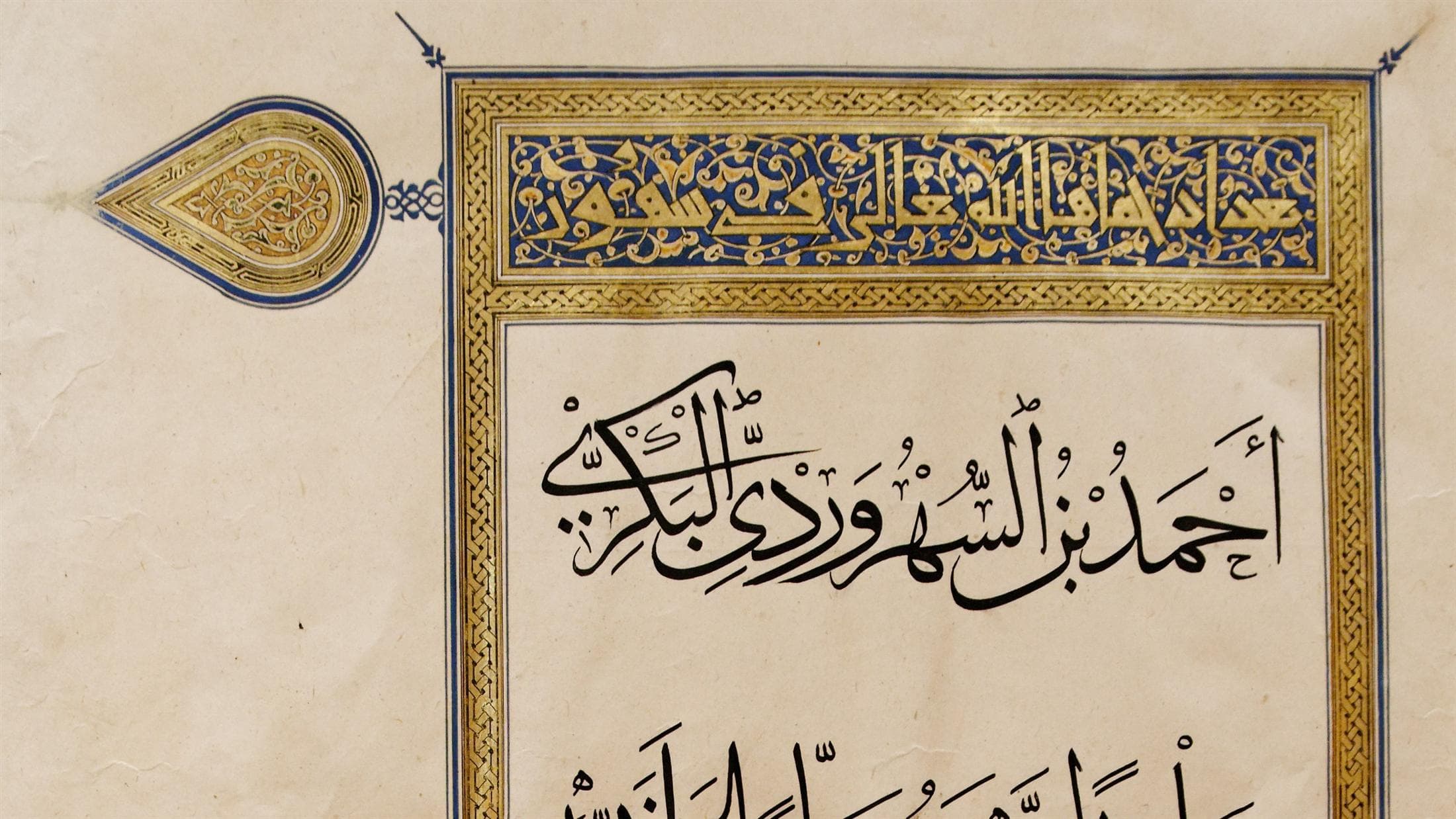
Is the Quran the word of God?
Muslims believe the Quran is the literal, final word of Allah, revealed to Muhammad in Arabic through the angel Gabriel over about twenty-three years, and that no human being could have produced it. The Quran also describes itself as confirming the Torah and the Gospel — the Scriptures given earlier to Jews and Christians — while standing as the final, supreme authority over them.
The Berea does not recognize the Quran as the word of God.
That conclusion does not rest on the Quran simply having come later than the Bible — arriving later does not, by itself, make a claim false. The real question is narrower: can a message that claims to come from God contradict what God has already revealed, and still be his word? Scripture's own answer — examined below — is no, regardless of how the later message describes itself.
What's actually being claimed, and how Scripture tests it
- The Quran claims a uniquely protected origin. "It is certainly We Who have revealed the Reminder, and it is certainly We Who will preserve it" (Quran 15:9), and "it is not possible for this Quran to have been produced by anyone other than Allah" (Quran 10:37) — a strong claim to divine, inimitable origin.
- It claims to confirm the Torah and Gospel, not replace them with something unrelated. Quran 5:48 calls itself "a confirmation of previous Scriptures," and Quran 3:3 says it confirms "what came before it, as He revealed the Torah and the Gospel" — the Quran does not claim to introduce an unrelated God or an unrelated story; it claims continuity with what Jews and Christians already had.
- Scripture's own test for a later claimed revelation is agreement with what God already said. Galatians 1:8-9: even an angel from heaven preaching a different message is to be rejected — not because it's late, but because it disagrees. That is the standard this page applies.
- The specific contradictions are examined elsewhere on this site. This page states the shape of the claim and the test. The concrete points of disagreement — Muhammad's prophetic claim, the identity of Jesus, and whether he was crucified — are each examined in their own dedicated study, linked below.
None of this treats the Quran carelessly or assumes what it says without reading it. The Quran's own words about itself are quoted directly above, in a widely used English translation, alongside a link to read them in full context. The conclusion follows from holding the Quran's own claim to confirm the Torah and Gospel next to its own content where that content disagrees with them — not from dismissing the claim without examining it.
Examine it for yourself
The evidence, the interpretations and the conclusion, separated so you can examine each step. Every passage is linked; read them in context.
Why the Quran's own text, first
Every claim on this page about what the Quran or Islamic tradition teaches is drawn from the Quran's own text or from recognized Islamic sources, and labeled by source type: explicit Quranic wording, mainstream Islamic interpretation, or hadith and tafsir (commentary) material distinct from the Quran itself. Christian commentary is used only for history, textual evidence, or comparative analysis — never to state what Islam teaches. Where a claim about a hadith or a specific interpretive tradition could not be independently verified against a primary source, it is described in general terms rather than quoted as if it were verified verbatim.
What they teach
Stated accurately, on its own terms, then examined against Scripture.
The Quran claims to be protected revelation that no one but Allah could have produced (Quran 15:9: "It is certainly We Who have revealed the Reminder, and it is certainly We Who will preserve it"; Quran 10:37: "It is not [possible] for this Quran to have been produced by anyone other than Allah"). It also claims to confirm the Torah and the Gospel as earlier revelation from the same God, while standing as the final authority over them: "We have revealed to you [O Prophet] this Book with the truth, as a confirmation of previous Scriptures and a supreme authority on them" (Quran 5:48), and "He has revealed to you [O Prophet] the Book in truth, confirming what came before it, as He revealed the Torah and the Gospel" (Quran 3:3).
Scripture already states the test for a claim exactly like this one. Paul writes that even an authoritative-sounding new message — his own example is deliberately extreme, an angel from heaven — is to be rejected, not deferred to, if it preaches "any 'good news' other than that which we preached to you" (Galatians 1:8-9). The test is not how the new message describes its relationship to what came before — confirming it, fulfilling it, standing over it — the test is whether its content agrees with what God has already revealed. A claim to confirm an earlier revelation and a claim to override its content where the two disagree cannot both be true at once. The Quran affirms the Torah and the Gospel as God's own revelation (Quran 3:3, 5:48). But on specific, central questions this site's other studies examine in full — who Jesus is, whether he is the eternal Son of God, and whether he was crucified — the Quran's teaching contradicts what the Torah and Gospel it claims to confirm actually say. "Confirmation" and contradiction do not sit together. By the standard Scripture itself sets for testing any later claimed revelation, the later claim does not stand simply because it arrives with confirming language.
- Galatians 1:8-9
Even an angel preaching something different from the gospel already delivered is rejected — the standard for any later claimed revelation, not just a human teacher's.
- 2 Timothy 3:16-17
Scripture is described as God-breathed and sufficient — not partial, pending a later confirming-and-correcting revelation.
That the Quran states both of these things — its own protected, inimitable origin, and its role confirming the Torah and Gospel while holding "supreme authority" over them — is a plain textual fact, quoted directly from the verses above. What follows from holding both claims together, when the Quran's own content departs from what the Torah and Gospel say on specific points, is the question this response addresses, and it is examined verse by verse in this site's dedicated studies on Muhammad's prophetic claim, the identity of Jesus, and the crucifixion.
Where the Quran's teaching conflicts with the Torah or Gospel it claims to confirm, popular Islamic teaching often resolves the tension through tahrif — the claim that the Jewish and Christian scriptures available today have been corrupted from their original form. This site's dedicated study on that specific claim finds it more complicated than a single settled doctrine: the Quran's own verses make several distinct, narrower charges rather than one uniform claim of wholesale rewriting, some Quran passages assume the Torah and Gospel in hand are still usable, and the fullest "the whole text was rewritten" position was substantially systematized later in Islamic history, alongside real, documented disagreement among Muslim scholars themselves.
This site's own method is the direct answer to a corruption claim: read the text for yourself. The Old and New Testament manuscript tradition — the Dead Sea Scrolls for the Hebrew Scriptures, and thousands of Greek New Testament manuscripts beginning within a lifetime or two of the apostles — predates Muhammad's lifetime by centuries and is independently attested outside any single tradition's control. A corruption claim invoked specifically at the points where two documents disagree, without independent manuscript evidence for a change at those exact points, explains the disagreement by assuming its own conclusion rather than demonstrating it. Scripture also states directly that God preserves his own word rather than allowing it to be lost or corrupted: Jesus says that "not even one smallest letter or one tiny pen stroke shall in any way pass away from the law" before heaven and earth do (Matthew 5:18). That claim, like the Quran's claim to its own preservation, is a claim — but unlike tahrif, it can be tested against an actual, continuous manuscript record older than Islam itself, which this site's own translation-comparison tools let a reader examine directly rather than take on anyone's word.
- Matthew 5:18
God's own word will not pass away or be corrupted — a claim tested against an actual manuscript record, not asserted without evidence.
What the evidence supports
The Quran claims a protected, inimitable origin and claims to confirm the Torah and Gospel while standing as the supreme authority over them. But its own content, on the specific points this site's other Islam studies examine, contradicts what those earlier Scriptures say about Christ. By Scripture's own standard for testing a later claimed revelation, that contradiction — not the Quran's later date — is what the claim cannot survive.
Galatians 1:8-9 rejects even an authoritative-sounding later claim, including an angel's, when its content disagrees with the gospel already delivered — the standard applied here. The Quran's own text (15:9, 10:37, 5:48, 3:3) claims a protected origin and continuity with the Torah and Gospel. Tahrif, the traditional explanation for where the texts disagree, is itself divided among classical Muslim scholars between textual and interpretive corruption, and is not independently evidenced by the manuscript record, which predates Islam and is open for any reader to examine. Therefore The Berea does not recognize the Quran as the word of God.
Examine further
- 2 Timothy 3:16-17
Scripture as God-breathed and sufficient — examined at length on this site's dedicated page on Scripture's authority.
- Jude 1:3
"The faith which was once for all delivered to the saints" — a settled deposit, not one later revelation supersedes.
Discuss and study
- Why does it matter that this page's objection is about contradiction, not about which book came first?
- What would it take to actually verify a claim like tahrif, rather than simply invoking it where two texts disagree?