Was Jesus really crucified?
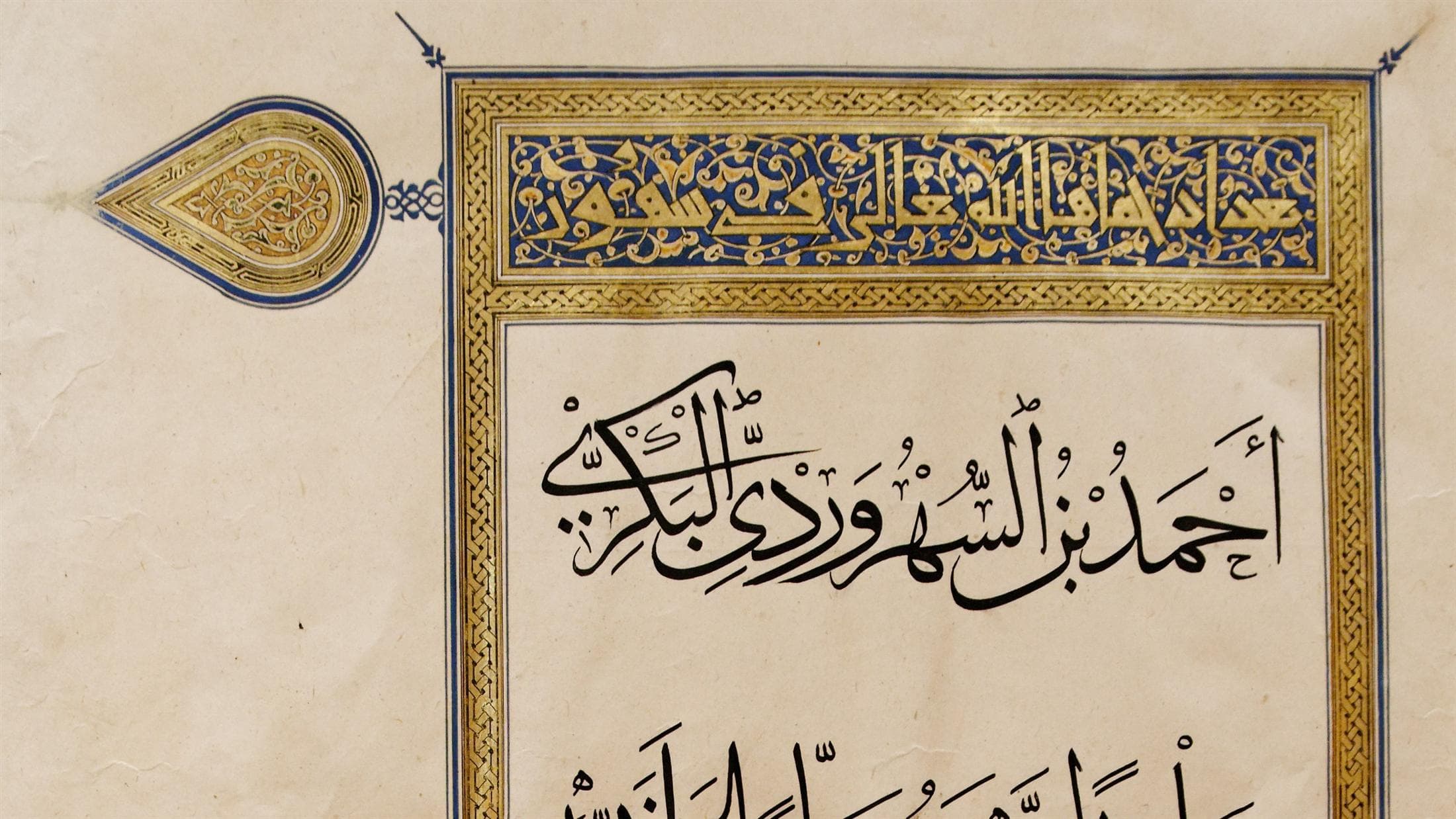
The Quran teaches that Jesus was not killed and was not crucified — that "another was made to resemble him" to those who thought they had killed him, and that God raised Jesus to himself instead (Quran 4:157-158). The Quran's own wording does not say who that other person was; that detail comes only from later commentary, and different commentators give different answers.
The Berea affirms that Jesus was genuinely crucified, died, was buried, and rose bodily from the dead.
This page separates three things that are often blended together: what the Quran's text actually says, what later Islamic tradition added to explain it, and what the biblical and historical evidence actually shows. Keeping them distinct is the only fair way to compare the two claims.
What each source actually says
- The Quran's own claim. "They did not kill him, nor did they crucify him; but [another] was made to resemble him to them... Rather, Allah raised him to Himself" (Quran 4:157-158) — denial of death, without naming a substitute.
- Later tradition disagrees on the details the Quran itself doesn't supply. Classical commentary offers more than one candidate for who was substituted, and a minority modern Muslim movement rejects substitution altogether in favor of a different theory — a sign the tradition itself is not settled on this point.
- The New Testament's claim is early, named, and checkable. 1 Corinthians 15:3-8: Paul reports Jesus appearing to Peter, then the twelve apostles, then to more than 500 people at once — and says most of those 500 were still alive when he wrote, naming them as people a skeptical reader could go ask. That is a claim offered as a public event, not a private experience.
- Non-Christian historians independently record the crucifixion. The Roman historian Tacitus and the Jewish historian Josephus, writing decades after the event and with no Christian sympathies, both record Jesus's execution under Pontius Pilate.
This is not a question this page treats as too sensitive to examine plainly. It is examined below in three parts: what Scripture itself records, what history outside Scripture independently records, and what The Berea concludes from holding both together.
Examine it for yourself
The evidence, the interpretations and the conclusion, separated so you can examine each step. Every passage is linked; read them in context.
Biblical evidence
All four Gospels describe Jesus's crucifixion under Pontius Pilate in concrete, specific detail — the location, the inscription over his head, those crucified beside him, the soldiers, and witnesses named by name. John's account includes a detail an inventing storyteller had little reason to add: "when they came to Jesus and saw that he was already dead, they didn't break his legs. However, one of the soldiers pierced his side with a spear, and immediately blood and water came out" (John 19:33-34). Paul's letter to the Corinthians, written within about twenty-five years of the crucifixion, states what he says he personally "received" and preached as being of "first importance" — not a peripheral detail, but the core of the gospel itself: "Christ died for our sins according to the Scriptures, that he was buried, that he was raised on the third day according to the Scriptures, and that he appeared to Cephas, then to the twelve. Then he appeared to over five hundred brothers at once, most of whom remain until now, but some have also fallen asleep. Then he appeared to James, then to all the apostles, and last of all... he appeared to me also" (1 Corinthians 15:3-8). The claim to weigh carefully is specific: Paul reports an appearance of the risen Jesus to more than 500 people at once, and says most of them were still alive at the time he wrote — naming a group a skeptical reader in Corinth could, in principle, go ask directly. This is not a claim to 500 separate written accounts; no such documents exist. It is Paul's own report of a single, large, public appearance, offered in a public letter as something checkable rather than kept as a private conviction — which is why it carries different evidential weight than a claim to a private vision seen by one person alone.
- John 19:33-34
A specific eyewitness detail — the soldiers' judgment that Jesus was already dead, and the pierced side.
- 1 Corinthians 15:3-8
Christ's death, burial, and resurrection stated as of "first importance," with an appearance to more than 500 people at once, most still alive when Paul wrote — a publicly checkable claim, not a private experience.
Historical evidence outside the New Testament
The Roman historian Tacitus, writing around AD 116 in his Annals, records: "Christus, from whom the name had its origin, suffered the extreme penalty during the reign of Tiberius at the hands of one of our procurators, Pontius Pilatus." Mainstream classical scholarship treats this as authentic — not a Christian insertion — since Tacitus shows no sympathy toward Christians elsewhere in the same passage. The Jewish historian Josephus, writing around AD 93, includes a passage about Jesus (the "Testimonium Flavianum") that scholarly consensus holds contains an authentic core beneath some later Christian additions; the reconstructed authentic core states that "Pilate, at the suggestion of the principal men amongst us, condemned him to the cross." Separately, in a passage scholars regard as almost universally authentic with minimal dispute, Josephus refers in passing to "the brother of Jesus, who was called Christ, whose name was James" — casual, independent confirmation that Jesus was a known historical figure called "Christ." Neither Tacitus nor Josephus had any reason, as non-Christian writers, to invent or exaggerate a crucifixion under Pilate.
What they teach
Stated accurately, on its own terms, then examined against Scripture.
The Quran states: "And [for] their saying, 'Indeed, we have killed the Messiah, Jesus, the son of Mary, the messenger of Allah.' And they did not kill him, nor did they crucify him; but [another] was made to resemble him to them. And indeed, those who differ over it are in doubt about it. They have no knowledge of it except the following of assumption. And they did not kill him, for certain. Rather, Allah raised him to Himself. And ever is Allah Exalted in Might and Wise" (Quran 4:157-158). The Quran's own text denies that Jesus was killed or crucified and states he was raised to God instead — it does not, in this wording, name who or what was "made to resemble him."
The New Testament's account is not a single late claim but a report anchored to named witnesses within the lifetime of the events themselves. Paul, writing within about twenty-five years of the crucifixion, summarizes what he says he "received": "Christ died for our sins according to the Scriptures, that he was buried, that he was raised on the third day according to the Scriptures, and that he appeared to Cephas, then to the twelve. Then he appeared to over five hundred brothers at once, most of whom remain until now, but some have also fallen asleep" (1 Corinthians 15:3-8). Naming still-living witnesses in a public letter is an inherently checkable claim, not a private conviction. The Gospel accounts add a specific physical detail from the crucifixion itself: "when they came to Jesus and saw that he was already dead, they didn't break his legs. However, one of the soldiers pierced his side with a spear, and immediately blood and water came out" (John 19:33-34) — a Roman execution squad, experienced at confirming death, satisfied enough that Jesus was already dead that they didn't bother breaking his legs as they did to the men crucified beside him. Independent, non-Christian historical sources add further weight: the Roman historian Tacitus, writing around AD 116, records that "Christus... suffered the extreme penalty during the reign of Tiberius at the hands of one of our procurators, Pontius Pilatus" — a detail mainstream classical scholarship treats as authentic, not a Christian insertion. Against this convergence of near-contemporary eyewitness claims and independent non-Christian record, the Quran's denial offers no comparable evidentiary claim of its own — it states the conclusion without naming a source, a witness, or an explanation of what those present actually saw instead.
- 1 Corinthians 15:3-8
A public, checkable claim naming specific eyewitnesses, most still living when Paul wrote — death, burial, and resurrection stated as received testimony, not private conviction.
- John 19:33-34
The execution detail of the pierced side, recorded by an eyewitness account, consistent with a Roman guard confirming genuine death.
Classical tafsir (commentary) offers differing, non-unanimous accounts of who was "made to resemble" Jesus, since the Quran's own text does not name anyone. Commentary associated with Ibn Kathir records a report that an unnamed volunteer among Jesus's companions was transformed to resemble him and crucified in his place; another tradition, recorded via Ibn Abbas, names a figure called "Tatianos." A minority modern movement, the Ahmadiyya, teaches instead that Jesus was crucified but survived and later died a natural death — a position explicitly rejected by mainstream Sunni and Shia Islam and not representative of Islamic teaching generally.
That mainstream Islamic commentary itself cannot agree on who was substituted — an unnamed volunteer in one account, a named figure in another, while a minority modern movement rejects substitution altogether in favor of a survived-crucifixion theory most Muslims reject — is worth noting plainly rather than smoothing over. It stands against a New Testament record that agrees, across four independent Gospel accounts and Paul's early letters, on the basic facts: Jesus was crucified under Pontius Pilate, died, was buried, and was seen alive afterward by named individuals and groups. The comparison is not between two equally settled traditions; it is between a claim with internal disagreement about its own central detail and a claim with external, near-contemporary, named corroboration, including from Tacitus and Josephus, two non-Christian historians with no reason to invent a crucifixion under Pilate.
- 1 Corinthians 15:3-8
The converging, named testimony this claim is measured against — examined in full in the previous comparison above.
What the evidence supports
Jesus truly was crucified, died, was buried, and bodily rose from the dead. The New Testament's early, named eyewitness testimony — including Paul's report of an appearance to more than 500 people at once, most still alive when he wrote — is corroborated by independent non-Christian historians Tacitus and Josephus. The Quran denies the crucifixion outright, without naming a source, a witness, or even who was supposedly substituted, a detail later Islamic tradition disputes internally. The Berea rejects the Quran's contradictory denial of the crucifixion.
1 Corinthians 15:3-8 records an early, public, checkable claim naming specific eyewitnesses; John 19:33-34 records a specific physical detail consistent with genuine death; Tacitus and Josephus, both non-Christian historians with no reason to invent the claim, independently confirm Jesus's execution under Pontius Pilate. Against this, the Quran's denial (4:157-158) does not name a source or witness, and Islamic tradition itself has never settled on who was supposedly substituted, with a significant modern Muslim movement rejecting the substitution account entirely.
Examine further
- Luke 24:39
The risen Jesus invites his disciples to touch him, "for a spirit doesn't have flesh and bones, as you see that I have" — a genuinely physical, bodily resurrection, not merely a spiritual survival.
- Acts 2:32
Peter's public preaching, in Jerusalem, weeks after the crucifixion, appeals to the resurrection as a fact his hearers could investigate for themselves.
Discuss and study
- Why does it matter that the Quran's own text does not name who was supposedly substituted for Jesus, while the New Testament names specific witnesses to his death and resurrection?
- What would change about the rest of Christian teaching if Jesus was not actually crucified and did not actually rise?